
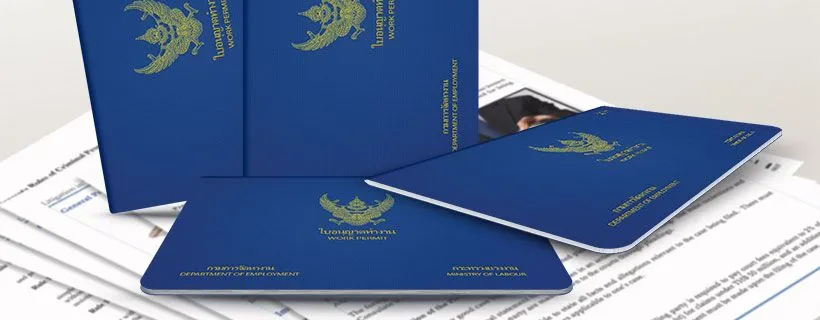
A Thai work permit is a legal authorization issued by the Thai government that allows a foreign national to work lawfully within the Kingdom of Thailand. For expatriates, foreign professionals, business owners, and corporate executives, obtaining a work permit is not merely an administrative requirement—it is a core legal obligation under Thai labor law. Thailand treats unauthorized work as a serious violation, and both the foreign worker and the employer can face fines, criminal liability, and deportation.
Many foreigners incorrectly assume that holding a long-stay visa, such as a business visa or marriage visa, is enough to legally work in Thailand. In reality, the visa provides permission to stay, while the work permit provides permission to perform work activities. These two legal systems—immigration law and labor law—operate separately but must remain aligned for lawful employment.
This article provides an in-depth and detailed guide to Thai work permits, including the legal framework, who needs a work permit, employer qualifications, application procedures, renewal requirements, restrictions on job scope, and compliance risks.
Legal Framework Governing Thai Work Permits
Thai work permits are regulated primarily under the Alien Employment Act, which governs:
- the legal definition of “work”
- restricted occupations reserved for Thai nationals
- requirements for employers hiring foreigners
- penalties for illegal employment
Work permits are issued and regulated by the Department of Employment Thailand, under the Ministry of Labour Thailand.
Immigration status is administered separately by the Thai Immigration Bureau, which controls visa extensions, re-entry permits, and long-term stay authorization. A foreigner must maintain lawful immigration status in order to hold a valid work permit.
What Is Considered “Work” Under Thai Law?
Thailand applies a broad definition of work. A foreigner may be considered working if they perform any activity involving physical or intellectual effort, regardless of whether compensation is received.
Examples of activities that may require a work permit include:
- employment in an office or business
- consulting services
- management or director responsibilities
- technical work, engineering, or IT services
- teaching and training
- performing services for customers
- supervising Thai staff
- handling sales or negotiations
Even if the foreigner is paid outside Thailand, the authorities may still treat the activity as “work” if it is performed physically within Thailand.
This broad interpretation is one of the most important reasons foreign nationals must approach Thai work authorization carefully.
Work Permit vs. Visa: Understanding the Difference
A work permit is not a visa, and a visa is not a work permit. In most cases, a foreigner must hold:
- a valid Non-Immigrant visa (commonly Non-Immigrant “B”), and
- a valid work permit
The most common legal structure for foreign employment is:
- Non-Immigrant “B” visa
- work permit issuance
- one-year extension of stay based on employment
Without the correct visa category, the work permit application may be rejected or delayed.
Who Needs a Thai Work Permit?
Most foreigners working in Thailand require a work permit, including:
- employees of Thai companies
- employees of foreign companies assigned to Thailand
- directors or authorized signatories performing active management
- teachers in schools or training centers
- engineers, architects, and consultants
- foreign staff in hotels, factories, and multinational companies
Short-term technical workers may qualify under special urgent work authorization, but this depends on the nature of the assignment and government discretion.
Employer Requirements to Sponsor a Work Permit
A Thai employer must meet legal and financial criteria to hire a foreigner. These requirements are not fixed universally but are applied as standard compliance benchmarks.
1. Registered Capital Requirements
A typical Thai company is expected to maintain:
- THB 2 million in registered capital per foreign employee
In some cases, the required capital may be reduced, such as where the foreigner is married to a Thai citizen.
2. Thai Employee Ratio Requirements
Many companies must employ:
- 4 Thai employees per 1 foreign work permit holder
Authorities often verify this through Social Security records.
3. Corporate Compliance and Business Activity
The company must demonstrate genuine operations, which may include evidence such as:
- corporate income tax filings
- VAT registration and monthly VAT filings (if applicable)
- audited financial statements
- withholding tax filings
- office lease agreement and location map
- photographs of the business premises
- business licenses for regulated industries
Shell companies or inactive entities may not qualify to sponsor work permits.
Foreign Employee Qualification Requirements
The foreign applicant must provide evidence showing that they are qualified for the job position. Authorities may review:
- educational background
- relevant work experience
- professional certificates
- job description and necessity for foreign expertise
If the job is considered unskilled or reserved for Thai nationals, approval may be denied.
Restricted Occupations for Foreigners
Thailand maintains restricted occupation lists reserving certain jobs for Thai citizens. While details may be amended by regulation, restricted occupations often include:
- manual labor
- street vending
- small retail trading
- tour guide services
- beauty services and hairdressing
- certain construction trades
- traditional Thai massage
Foreigners may not legally obtain work permits for restricted occupations, regardless of employer sponsorship.
Work Permit Application Procedure
Step 1: Prepare Employer Documentation
Employers must prepare standard corporate documents, commonly including:
- company affidavit and registration certificate
- shareholder list
- VAT certificate (if applicable)
- financial statements
- corporate income tax filings
- Social Security filings and employee list
- office lease contract
- company location map
All documents must usually be signed and stamped by the company director.
Step 2: Prepare Employee Documentation
The foreign applicant must submit:
- passport copy and visa stamp
- passport photographs
- medical certificate issued in Thailand
- education certificates and transcripts
- resume or CV
- employment contract
- reference letters confirming experience (often required)
Foreign-issued documents may need translation and legalization.
Step 3: Submission to the Department of Employment
The application is filed at the Department of Employment. Depending on the province and business category, processing may take:
- several days to a few weeks
Once approved, the work permit is issued either in book form or as an electronic work permit system, depending on current administrative policy.
Work Permit Conditions and Scope Restrictions
A Thai work permit is strictly limited. It defines:
- the employer
- the job title
- permitted duties
- work location
A foreigner may not legally work outside these conditions. Common violations include:
- working at a different branch not listed
- performing duties beyond the approved job scope
- taking part-time work for another company
- managing another business not specified in the permit
If employment duties change significantly, the work permit must be amended.
Work Permit Renewal and Long-Term Compliance
Work permits are typically issued for one year and renewed annually. Renewal usually requires updated evidence of:
- company tax compliance
- salary payments and withholding tax filings
- Social Security compliance
- continued Thai employee ratio compliance
- updated financial statements
If the company fails to maintain compliance, the foreigner may lose eligibility for renewal.
Termination and Work Permit Cancellation
When employment ends, the work permit must be canceled. The cancellation process usually involves:
- employer notification to the Department of Employment
- return or cancellation of work permit documentation
- coordination with Immigration for visa status termination or change
If a work permit is canceled, the related visa extension may also be affected, requiring the foreigner to leave Thailand or obtain a new visa basis.
Penalties for Illegal Employment
Penalties for Foreign Workers
Foreigners working without a valid work permit may face:
- fines
- imprisonment
- deportation
- blacklisting and long-term entry bans
Penalties for Employers
Employers may face:
- fines per foreign employee
- criminal liability
- suspension of business operations in severe cases
Enforcement has increased in many sectors, particularly hospitality, education, and consulting.
BOI-Promoted Companies and Special Work Permit Advantages
Companies promoted by the Thailand Board of Investment (BOI) often benefit from:
- streamlined visa and work permit processing
- reduced documentary burdens
- faster approvals through One Stop Service Centers
- flexibility in employing foreign specialists
This is a major advantage for technology, manufacturing, and large investment projects.
Practical Compliance Strategy for Foreign Employees
Foreign nationals working in Thailand should ensure:
- they never begin work before permit issuance
- their job duties match the permit description
- work location changes are properly updated
- renewals are initiated well in advance
- Immigration reporting obligations (90-day reporting) are followed
- they keep work permit records accessible during inspections
Employers should also maintain updated corporate documents, payroll records, and tax filings to support renewals.
Conclusion
A Thai work permit is a mandatory legal requirement for most foreign nationals working or conducting professional services in Thailand. Governed by the Alien Employment Act and regulated by the Department of Employment, it operates alongside Thailand’s immigration system and must remain consistent with the foreigner’s visa status.
The work permit process is highly documentation-based, and approval depends not only on the foreigner’s qualifications but also on the sponsoring company’s financial stability, tax compliance, and staffing structure. Because work permits are job-specific and location-specific, foreigners must strictly comply with the approved scope of employment to avoid violations.
For foreign professionals and Thai employers, the most effective strategy is proactive compliance management, accurate record-keeping, and timely renewals. When properly handled, a Thai work permit provides a stable legal foundation for long-term employment and business operations in Thailand.